Exploring The Life of Chuck: A Review of a Fantasy Drama

Hi, my readers, I hope you are having a good weekend. This is a different kind of film I watched recently that I found quite entertaining. And maybe you’ll like it too.

The Life of Chuck is a 2024 American fantasy drama film written for the screen, co-produced, edited, and directed by Mike Flanagan. It is based on the 2020 novella of the same name by Stephen King. The film stars Tom Hiddleston, Chiwetel Ejiofor, Karen Gillan, Mia Sara, Carl Lumbly, Benjamin Pajak, Jacob Tremblay, and Mark Hamill, with narration by Nick Offerman.

The film’s plot follows the formative moments in the life of Charles “Chuck” Krantz, chronicled in reverse chronological order, from his death, depicted as the end of the universe, to his childhood.

The film’s greatest strength is its unconventional narrative design. The story unfolds like a memory being gently rewound, each chapter revealing not only new information but also new emotional context. What initially feels mysterious and even abstract gradually becomes intimate and profoundly relatable. The structure isn’t a gimmick—it reinforces the film’s central idea that every life, no matter how ordinary it seems from the outside, contains multitudes.

There are chapters to the film. The first is Act 3, Thanks, Chuck

Chuck mostly doesn’t appear in this Act. Middle school teacher Marty Anderson notes unusual things happening around the world, from natural disasters to the worldwide loss of the Internet. Several billboards and advertisements popping up everywhere display a picture of an accountant named Charles “Chuck” Krantz, accompanied by the words “Charles Krantz: 39 Great Years! Thanks, Chuck!” Marty’s ex-wife, Felicia Gordon, calls him, and they ponder if the end of the universe is upon them. Marty describes Carl Sagan’s Cosmic Calendar, a method to visualise the age of the universe in a single calendar year. Both of them begin seeing more disasters and supernatural occurrences.

After losing telephone service and electricity, Marty goes to Felicia’s home so they can stay with one another in the universe’s final moments, watching as the stars vanish one by one. The end of the universe is revealed to be connected to 39-year-old Chuck, who is bedridden in a hospital, dying from a brain tumor. He is accompanied by his wife, Ginny, and his son Brian. Chuck passes away as Ginny tells him, “39 great years. Thanks, Chuck. Meanwhile, Marty tells Felicia, “I love you,” just as the universe abruptly ends.

You realize that what you have been watching is the destruction of Chuck’s mind.

The next two Acts deal with important moments in Chuck’s life, both sorrowful and joyful. By the end, you realize that Chuck was no boring accountant, but lived a full life. Even if he died at just 39 years of age.

I give it four stars out of five. Now, stop wasting your life, and go watch some TV!

Distant Love (Part 58)

Lula puts her hand through her hair. “Well, it’s not Maeve exactly, more her family. We’re not sure exactly if she is involved.”

“Involved in what?”

“The transportation of drugs from low Earth orbit.”

Derek could feel his heart thumping. “No way!”

Lulu gets out of her seat and stands beside him, showing him her badge.

“Blasters.”

“Hey, no need for foul language. Now make sure to keep smiling. I don’t want to have to bring you to the station for interrogation.”

Derek raises his eyebrows. “Why would you do that?”

Her voice is more aggressive now. “Because, Derek, this is a very serious matter. The quantity of drugs is huge. But most importantly, it will earn me a nice promotion. You will help me, or you’ll be prosecuted as a conspirator. How does that sound?”

The Lunar police had a terrible reputation for corruption and targeting innocents. Derek never thought he’d ever get in their crosshairs. But he had.

“What could you possibly want me to do? Like, I haven’t even ever actually met her.”

Lulu puts her arm around him. “She is the weak link in the family, and you are the closest thing she has to an actual boyfriend. So, for now, keep on talking to her, and I’ll be in touch. I’ve seen how you have been looking at the women here, I’ll give you a piece of what you have been looking for.”

With that, she leans in, kissing him. Her tongue brushes against his lips.

And then she is gone.

Binge-Watching Turn: Washington’s Spies Review

Well, my dear readers, I am writing at a furious pace to tell you about a series I have been binge-watching. It’s called Turn: Washington’s Spies, and I’ve watched Series 1 and 2 to date. It definitely gets five stars from me.

The series spans the events from 1776 to 1781 and features Abraham Woodhull, a farmer from Setauket, New York, and his childhood friends. They form an unlikely group of spies called the Culper Ring, which eventually helps to turn the tide during the American Revolutionary War. The series begins in October 1776, shortly after British victories, recapturing of Long Island and the Port of New York for the Crown, leaving General George Washington’s army in dire straits.

The show is based on a true story, but fictionalized. The costumes and attention to detail immerse you in the time period.

Season One’s greatest strength is its patient, immersive storytelling. Rather than rushing headlong into espionage theatrics, Series One takes time to establish Setauket as a lived-in community, making the risks of spying feel personal and devastatingly real. The show captures the moral ambiguity of the era: loyalties are divided, neutrality is dangerous, and survival often requires compromise. The often testy relationship between Abraham, and his father is a microcosm of what’s happening in the nation overall. This slow-burn approach pays off by grounding the suspense in genuine human stakes rather than spectacle alone.

The pace in Series Two goes up a notch as things start to become critical for both the spies and the Continental Army.

The best thing about the show is the various characters. My favorite one is Simcoe, a psychopathic British officer who keeps both the sense of threat and intrigue running high.

Running a close second is Anna Strong, who is a spy and at the start, runs the local public house. Her perceived main contribution in the ring was to relay signals to a courier who ran smuggling and military missions for General George Washington. She has a complex, fluid relationship with Abraham, and plays a vital role in what is achieved.

What more can I tell you? It’s currently on Netflix.

Documentary Review: I’m Chevy Chase and You’re Not

Those of my readers around in the eighties will probably remember Chevy Chase. I remembered him from comedic films from the time period, but it had been many years since I even thought of him.

So, I said I’d give this documentary film a try. Its name is “I’m Chevy Chase and You’re Not.” From the start, it becomes clear that his bad reputation as a coworker will be a big focus, as well as his past drug abuse.

The film does an excellent job of reminding you just how seismic Chase’s impact on comedy really was. Saturday Night Live doesn’t just get a nod—it gets a victory lap. Watching early clips of Gerald Ford tumbling down stairs and Chase anchoring Weekend Update is like seeing comedy history being invented in real time, mostly held together with duct tape and confidence. The documentary smartly lets these moments breathe, trusting the material to remind you why Chase was, for a time, the funniest man in America.

Then come the movies, and oh, what a parade it is. Caddyshack, Fletch, National Lampoon’s Vacation—the documentary rolls through them like a greatest-hits album where every track is either iconic or inexplicably quotable. There’s a genuine joy in revisiting how Chase perfected the art of the smug, clueless, yet weirdly lovable leading man. His comic persona—equal parts charm and chaos—gets the credit it deserves as a blueprint for generations of comedians who followed.

But then there are the drugs. And he did a lot. And he could be mean. The drug abuse, his comedy, and this meanness all likely have one source – an abusive mother. He developed it as a coping mechanism. It is one he still uses as he makes jokes to deflect difficult or awkward moments, even in his eighties. Still, even his meanness comes off as him being a bit of a rascal.

When the stories get messy. You come away with the sense that Chase’s imperfections didn’t cancel out his contributions—they complicated them, humanized them, and, strangely, made his successes even more impressive.

By the end, the documentary feels less like a verdict and more like a well-earned, slightly crooked standing ovation. It celebrates a man who made millions of people laugh, sometimes by falling down, sometimes by being the joke, and sometimes by being in on it all along.

It gets four out of five stars from me.

If you’ve seen it, what did you think?

Review of One Battle After Another (2025)

Well, readers, if ever there was a counter-culture film to Trump’s America, then this is it, It oozes wokeness, but, at nearly three hours long, is it any good?

It stars some great actors, Leonardo Di Capprio, Sean Penn, and Benicio del Toro. Di Capprio gives a great performance.

The film’s narrative grapples with ideas about legacy, revolution, and personal consequence. For many viewers, these themes may give the story a depth beyond surface-level action. Thrilling sequences are filled with moments that invite reflection on how past actions reverberate through personal and political life.

Ghetto” Pat Calhoun (Di Capprio)and Perfidia Beverly Hills are members of a far-left revolutionary group, the French 75. While breaking out detained immigrants from Otay Mesa Detention Center, Perfidia sexually humiliates the commanding officer, Steven J. Lockjaw, who afterward becomes obsessed with her. Pat and Perfidia become lovers. When Lockjaw catches Perfidia planting a bomb, he releases her after she agrees to his demand to later meet him for sex.

After Perfidia gives birth to a girl named Charlene, Pat tries to persuade her to settle down, but she instead abandons Pat and Charlene to continue her revolutionary activities. She is arrested after murdering a security guard in an armed bank robbery. Lockjaw arranges for her to avoid prison in exchange for the names and whereabouts of key French 75 members. Perfidia enters witness protection, while Lockjaw uses the information she provided to hunt down and summarily execute her comrades. French 75 member Howard Sommerville gives Pat and Charlene stolen identities as Bob and Willa Ferguson, while Perfidia flees witness protection for Mexico.

This covers the first third of the film, or so. French 75 are terrorists. They bomb courthouses and free illegal immigrants at the point of the gun. Their cited causes are no borders and bodily autonomy (against restrictions on abortion). And white people are bad, mostly.

There is a part that had me laughing. In the car early in the film, Perfidia asks Leonardo’s character Pat if he likes black girls. I knew that wouldn’t be a problem, but I wondered if she would be too old for him!

A weakness in the early part of the film is how easily Lockjaw can track Perfidia with little explanation given. Also, nobody in the movement seems bothered that the only person they kill is a black security guard.

Anyhow, sixteen years later, living off-the-grid in the sanctuary city of Baktan Cross, California, Bob (Pat) has become a paranoid stoner. He is protective of Willa (Charlene), now a free-spirited teenager who resents his substance abuse, and has led her to believe Perfidia was a hero. Through his vehement anti-immigration efforts, Lockjaw has become a colonel and a prominent figure within the U.S. security agencies. When Lockjaw is invited to become a member of the Christmas Adventurers Club, a white supremacist secret society, he seeks to kill Willa to hide his past interracial relationship with Perfidia. He hires the Indigenous bounty hunter Avanti Q to capture Howard, triggering a distress signal to be sent to the French 75.

What follows is some good action scenes. As with more modern films, Charlene saves herself to a large extent. There is little need for the father figure except as emotional support.

I score the film three stars out of five. In cinemas now.

Why The Last Jedi Stands Out in Star Wars Saga

Believe it or not, it turns out that I missed some of the Star Wars films. And, perhaps you have too. They don’t appear on anything, except Disney, so they are easily missed. At least, I had two good films to watch. Always look on the bright side of life, eh.

Star Wars: The Last Jedi is the cinematic equivalent of showing up to a family reunion and discovering that Uncle Luke has undergone a profound philosophical transformation, dyed his hair gray, and now has very strong opinions about the Jedi Order. And honestly? It’s not the best part of the film. Uncle Luke is a bit too entrenched for my liking.

Visually, the movie is absolutely gorgeous. Every frame looks like it was designed to be someone’s desktop background. The red-and-white battlefield on Crait is striking, the space battles are inventive, and the quieter moments are given room to breathe. From an Irish perspective, the scenes on Skellig Michael are fantastic. We’re going to have yanks visiting these shores for many years to come.

Rey and Kylo Ren are the central characters of this film, and it is clear that this is their trilogy. Good versus evil, the light versus the darkness. Except, there is a bit of grey in both of them, leaving you unsure what way things are going to end up.

Most of all, this film is great entertainment for all ages. I give it four stars out of five.

Have you seen it? Let me know what you think.

Exploring _The Salt Path Scandal_: A Review

Well, readers, I watched this gem on Sky earlier. The first few minutes revisit what had been a best-selling book, later turned into a starring Gillian Anderson.

The show lulls you into a tranquil daze. There are drone shots of cliffs that look like they’ve been photoshopped by the concept of serenity itself. Gentle strings hum. Someone says something earnest about “healing.” You exhale. It’s about a 650-mile walk you can do in the South West of England as told by Raynor Winn. She had just lost her house, and her husband was diagnosed with a terminal illness. The walk was transformative.

And then—record scratch—a talking head appears to ask a question so sharp it could open tinned beans: “But did that actually happen?” From there, The Salt Path Scandal becomes less a journey and more a brisk hike through footnotes.

The documentary’s true star is its tone, which can best be described as polite British skepticism wearing a fleece. Nobody yells. Nobody lunges. Instead, the filmmakers deploy the deadliest weapon in the national arsenal: calm, persistent follow-ups. “Just to clarify,” a narrator says, with the menace of a librarian about to revoke privileges. Every “just to clarify” lands like a small pebble in your shoe—annoying, impossible to ignore, and increasingly painful over time.

You see, the book claimed to be a memoir. Like, it was supposed to be true. But once, a journalist, Hadjimatheou, probed a bit. Well, there were reasons to be skeptical.

Structurally, the series is a masterclass in pacing. Each episode introduces a claim, lets it bask in sunlight, then quietly rotates it to reveal a price tag, a date discrepancy, or a witness who remembers things… differently. It’s less gotcha journalism and more hmm, interesting journalism,

By the finale, you’re left amused, mildly scandalized, and deeply suspicious of any memoir. The truth is out there somewhere.

It gets four stars out of five from me.

Have you seen it? Let me know what you think.

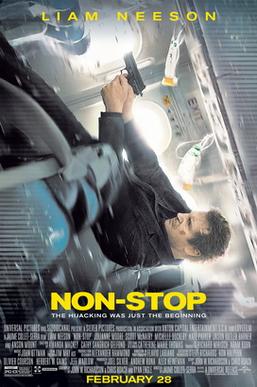
Liam Neeson is superb in Memory (2022 film)

Liam Neeson is back in action in the 2022 film, Memory. Like seriously, this guy is a film-making machine at this stage. In this one, he stars as a septuagenarian hitman called Alex Lewis who is—plot twist—forgetting things. Not metaphorically. Not “I forgot where I put my keys.” We’re talking medically, tragically, narratively, forgetting things. Which is bold, because the man’s entire cinematic brand is “I will find you,” and now the movie dares to ask: but what if he occasionally forgets why?

Alex is hired for a job that he doesn’t really want to take, only to discover that the target is a child. In a move that instantly promotes him from “professional killer” to “professional killer with ethics,” he refuses the hit. He gives a warning that the girl is to be left alone. When another contract killer completes the task and goes after him, he turns his very specific set of skills on the people who ordered it. Meanwhile, his memory is deteriorating faster than a phone battery in the cold, forcing him to leave himself notes like a lethal, cardigan-wearing version of Memento.

This is where the movie shines. Instead of pretending Neeson is still 30, Memory leans into age, regret, and cognitive decline—and somehow makes them tense, sad, and weirdly wholesome.

The action is grounded, tense, and refreshingly free of superhero nonsense. Neeson doesn’t leap off buildings—he moves with purpose, like a man who knows his knees won’t forgive him later. Every fight feels heavy, deliberate, and earned.

The supporting cast (including Guy Pearce and Monica Bellucci) adds gravitas, though let’s be honest: this is Liam’s movie, and everyone else is just trying not to get emotionally or physically outmatched.

Oh, and the ending is perfect.

The best film I’ve seen in some time. Five stars out of five from me.

Have you seen it? Let me know what you think.

Colin Farrell’s Haunting Performance in a Macau Gambling Drama

Some films linger in your mind long after you would think. They make you think, leaving a permanent mark on your mind. Ballad of a Small Player is one of those films. It reminds me of Leaving Las Vegas, except this time a gambling addict rather than an alcoholic is the central figure. And it’s set in Macau, the gambling Mecca of China.

Colin Farrell is back! His first film in quite some time. He gives a committed, raw, and deeply haunting performance as Brendan Reilly, aka Lord Doyle — a once-privileged con man now at the mercy of his gambling addiction and debts. He embodies both the swagger and fragility of a man on the brink.

His luck has deserted him, and the walls are closing in on all sides. Reilly meets Dao Ming, an enigmatic credit broker.

Comforted by Reilly after one of her despondent clients jumps to his death, a guilt-stricken Dao brings him to a temple on the water for the first night of the Ghost Festival. Though she fears her own luck has run out, Reilly believes his fortune can turn in both their favor. However, he wakes up alone with a number written on his hand.

What follows is a complex, somewhat fantastical tale about a gambler whose fortune changes when he needs it most. But now he fears for his soul as he engages in a dangerous waltz to come out the other side.

I give the film four stars out of five.

Have you seen it? Let me know what you made of it in the comments.

Exploring the Thrills of Stranger Things Season 5 Episodes 1-4

Dear readers, the first four episodes of Season 5 dropped on Netflix a few days ago. And, well, I, being the TVaholic you all know and love, have watched them all.

The first thing to hit me was What the hell is happening again? It’s been so long since Season 4, and my mind has gone a bit rusty. A few minutes later, I was back at my A-game.

A quick reminder from Wikipedia –

After the events of the fourth season, in the fall of 1987, the group seeks to find and kill Vecna after the Rifts opened in Hawkins. The mission becomes complicated when the military arrives in Hawkins and begins hunting Eleven. As the anniversary of Will Byers’ disappearance approaches, the group must fight one last time against a new deadly threat.

It felt all nostalgic and warm to be back watching. Every now and again, it’s great to be reminded just how great the nineteen-eighties really were.

All the loved chair characters are back.

Millie Brown is once more stealing the show. Her relationship with Hop, a resounding theme. Still, there is so much more. You are kept on the edge of your seat, unsure what happens next. At times, especially in episode four, it can be terrifying.

Visually, Series 5 pushes the show to new heights. The Upside Down is more otherworldly and terrifying than ever, and the action sequences are some of the most ambitious in the show’s history. Yet despite the heightened stakes, the season never loses its grounding in friendship, loyalty, and coming-of-age struggles.

It’s well on the way to a high score.

Have you seen it yet? If so, let me know what you thought in the comments.