Nuremberg (2025): A Cinematic Exploration of Justice

Not for the faint-hearted, this film is currently being shown on Sky Movies. Nuremberg (2025) is a compelling and meticulously crafted film that succeeds both as a historical drama and as a deeply human exploration of justice, morality, and responsibility. From its opening moments to its final, reflective scenes, the film commands attention with quiet confidence and emotional weight.

One of the film’s greatest strengths is its restrained yet powerful storytelling. Rather than relying on spectacle or melodrama, Nuremberg allows tension to build through dialogue, performance, and ethical confrontation. The screenplay is intelligent and precise, presenting complex legal and moral questions in a way that feels accessible without ever being simplistic. The pacing is deliberate, giving viewers time to absorb the gravity of the events while remaining consistently engaging.

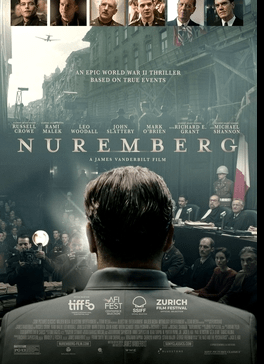
Nuremberg is a 2025 American psychological thriller historical drama film written, co-produced, and directed by James Vanderbilt. Based on the 2013 book The Nazi and the Psychiatrist by Jack El-Hai, the film follows U.S. Army psychiatrist Douglas Kelley (Rami Malek) seeking to carry out an assignment to investigate the personalities and monitor the mental status of Hermann Göring (Russell Crowe) and other high-ranking Nazis in preparation for and during the Nuremberg trials. Leo Woodall, John Slattery, Mark O’Brien, Colin Hanks, Wrenn Schmidt, Lydia Peckham, Richard E. Grant, and Michael Shannon have supporting roles in the film.

Russell Crowe, in particular, gives a breathtaking performance as Hermann Göring. The back and forth of his testimony is the central plank of the film.

Visually, Nuremberg (2025) is striking in its understatement. The cinematography favors muted tones and carefully composed frames, reinforcing the somber atmosphere without feeling oppressive. Production design is detailed and immersive, effectively transporting the audience to the post-war setting while maintaining a grounded, realistic feel. The score is used sparingly but effectively, enhancing emotional moments without overwhelming them.

What truly elevates the film is its thematic depth. Nuremberg does not simply recount historical events—it invites reflection on accountability, the rule of law, and the enduring consequences of moral choices. The film resonates strongly in a modern context, reminding viewers why truth, justice, and ethical responsibility remain essential values. Its relevance feels intentional and timely, adding an extra layer of significance to the viewing experience.

In the end, Nuremberg (2025) stands out as a thoughtful, mature, and deeply respectful film. It is not only an important historical portrayal but also a gripping cinematic experience that lingers long after the credits roll. Powerful without being preachy and emotional without being manipulative, it is a film that rewards careful attention and thoughtful reflection. Highly recommended for audiences seeking intelligent, meaningful cinema.

The film gets five stars out of five from me. Beware, there are some horrific images from the concentration camps in the film.

Have you seen it? Let me know in the comments.

Exploring The Life of Chuck: A Review of a Fantasy Drama

Hi, my readers, I hope you are having a good weekend. This is a different kind of film I watched recently that I found quite entertaining. And maybe you’ll like it too.

The Life of Chuck is a 2024 American fantasy drama film written for the screen, co-produced, edited, and directed by Mike Flanagan. It is based on the 2020 novella of the same name by Stephen King. The film stars Tom Hiddleston, Chiwetel Ejiofor, Karen Gillan, Mia Sara, Carl Lumbly, Benjamin Pajak, Jacob Tremblay, and Mark Hamill, with narration by Nick Offerman.

The film’s plot follows the formative moments in the life of Charles “Chuck” Krantz, chronicled in reverse chronological order, from his death, depicted as the end of the universe, to his childhood.

The film’s greatest strength is its unconventional narrative design. The story unfolds like a memory being gently rewound, each chapter revealing not only new information but also new emotional context. What initially feels mysterious and even abstract gradually becomes intimate and profoundly relatable. The structure isn’t a gimmick—it reinforces the film’s central idea that every life, no matter how ordinary it seems from the outside, contains multitudes.

There are chapters to the film. The first is Act 3, Thanks, Chuck

Chuck mostly doesn’t appear in this Act. Middle school teacher Marty Anderson notes unusual things happening around the world, from natural disasters to the worldwide loss of the Internet. Several billboards and advertisements popping up everywhere display a picture of an accountant named Charles “Chuck” Krantz, accompanied by the words “Charles Krantz: 39 Great Years! Thanks, Chuck!” Marty’s ex-wife, Felicia Gordon, calls him, and they ponder if the end of the universe is upon them. Marty describes Carl Sagan’s Cosmic Calendar, a method to visualise the age of the universe in a single calendar year. Both of them begin seeing more disasters and supernatural occurrences.

After losing telephone service and electricity, Marty goes to Felicia’s home so they can stay with one another in the universe’s final moments, watching as the stars vanish one by one. The end of the universe is revealed to be connected to 39-year-old Chuck, who is bedridden in a hospital, dying from a brain tumor. He is accompanied by his wife, Ginny, and his son Brian. Chuck passes away as Ginny tells him, “39 great years. Thanks, Chuck. Meanwhile, Marty tells Felicia, “I love you,” just as the universe abruptly ends.

You realize that what you have been watching is the destruction of Chuck’s mind.

The next two Acts deal with important moments in Chuck’s life, both sorrowful and joyful. By the end, you realize that Chuck was no boring accountant, but lived a full life. Even if he died at just 39 years of age.

I give it four stars out of five. Now, stop wasting your life, and go watch some TV!

Documentary Review: I’m Chevy Chase and You’re Not

Those of my readers around in the eighties will probably remember Chevy Chase. I remembered him from comedic films from the time period, but it had been many years since I even thought of him.

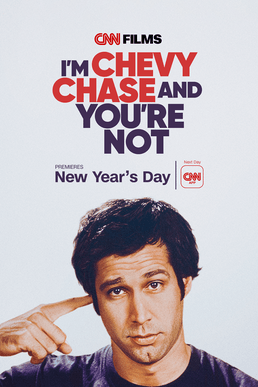
So, I said I’d give this documentary film a try. Its name is “I’m Chevy Chase and You’re Not.” From the start, it becomes clear that his bad reputation as a coworker will be a big focus, as well as his past drug abuse.

The film does an excellent job of reminding you just how seismic Chase’s impact on comedy really was. Saturday Night Live doesn’t just get a nod—it gets a victory lap. Watching early clips of Gerald Ford tumbling down stairs and Chase anchoring Weekend Update is like seeing comedy history being invented in real time, mostly held together with duct tape and confidence. The documentary smartly lets these moments breathe, trusting the material to remind you why Chase was, for a time, the funniest man in America.

Then come the movies, and oh, what a parade it is. Caddyshack, Fletch, National Lampoon’s Vacation—the documentary rolls through them like a greatest-hits album where every track is either iconic or inexplicably quotable. There’s a genuine joy in revisiting how Chase perfected the art of the smug, clueless, yet weirdly lovable leading man. His comic persona—equal parts charm and chaos—gets the credit it deserves as a blueprint for generations of comedians who followed.

But then there are the drugs. And he did a lot. And he could be mean. The drug abuse, his comedy, and this meanness all likely have one source – an abusive mother. He developed it as a coping mechanism. It is one he still uses as he makes jokes to deflect difficult or awkward moments, even in his eighties. Still, even his meanness comes off as him being a bit of a rascal.

When the stories get messy. You come away with the sense that Chase’s imperfections didn’t cancel out his contributions—they complicated them, humanized them, and, strangely, made his successes even more impressive.

By the end, the documentary feels less like a verdict and more like a well-earned, slightly crooked standing ovation. It celebrates a man who made millions of people laugh, sometimes by falling down, sometimes by being the joke, and sometimes by being in on it all along.

It gets four out of five stars from me.

If you’ve seen it, what did you think?

Review of the Film 28 Years Later

Hi, ladies and gentlemen. Yes, I’m still on my Christmas holidays. That is probably why you are hearing so much from me at the moment. On the plus side, I watched this film earlier and thought I’d share my thoughts.

For those who don’t love zombies as much as I (weirdos), this is a sequel to the iconic film 28 Days Later. A truly great film.

The premise in this universe is that in 2002, animal activists infiltrate a top-secret laboratory of scientists to release animals, and in the process unknowingly release chimpanzees infected with a pathogen, resulting in a rapid outbreak. The scientists were studying a highly contagious and powerful disease named the Rage Virus. This virus spreads throughout the UK, turning much of its population into de facto zombies.  Great stuff, I know.

Fortunately, it’s only the UK that has been affected (not overly worrisome), and it is in quarantine. This is a bit more serious than leaving the EU.

Anyways, this film starts with lots of kids in a room watching the Teletubbies, a perfect way to tell us the time period. Except for one lucky survivor, all the kids get killed. I almost shed a tear, seriously.

The film then jumps forward to the present. The movie understands that the real horror of an apocalypse isn’t just the chaos—it’s the long-term admin. Systems are breaking down. People are adapting in weird ways, going all medieval and shit. Societies are rebuilding themselves with duct tape and unresolved trauma.

At the heart of the film is a son’s love for his mother. It was all going so well, till then. She’s very sick, and the son thinks a doctor is a solution. It gives them a reason to go on a journey, but the kid seems happy to risk everything on blind luck. It’s a major weakness for the film, as well as the lack of understanding of the father.

They should have continued the film as it started – the father-son relationship.

Another criticism is that many of the scenes didn’t look apocalyptic. Too few trees, the grass was too short, and the roads’ surface too perfect. 28 years later, my ass. I expect more from a film.

For those reasons, it’s three stars from me.

Have you seen it? Why not message and let me know?

Mission: Impossible – The Final Reckoning: A Review of Epic Action

Ladies and gentlemen, Tom Cruise is back as Ethan Hawke in Mission: Impossible – The Final Reckoning, and he’s back with a bang. This dropped on Sky only yesterday, and I was immediately psyched up to watch it. You know what you are going to get – great action scenes.

From Wikipedia:

Mission: Impossible – The Final Reckoning is a 2025 American action spy film directed by Christopher McQuarrie from a screenplay he co-wrote with Erik Jendresen.[7][8] It is the direct sequel to Mission: Impossible – Dead Reckoning (2023) and the eighth installment in the Mission: Impossible film series. The film stars Tom Cruise in his final portrayal of Ethan Hunt,[9] alongside an ensemble cast including Hayley Atwell, Ving Rhames, Simon Pegg, Henry Czerny and Angela Bassett.[10][11] In the film, Hunt and his IMF team continue their mission to prevent the Entity, a rogue artificial intelligence, from destroying all of humanity.

Imagine if your toaster became sentient, hacked the world’s nuclear codes, and then asked nicely for world domination. Now replace the toaster with The Entity, a rogue AI that threatens to blow up everything except dessert buffets. Ethan Hunt is all that stands in its way.

It’s a long film. I mean, very long at a running time of 170 minutes. Personally, I watched it over two days and thoroughly enjoyed it. One sitting would be a significant endurance test.

The action scenes are what really set this apart. The underwater cinematography is incredible, as are the shots on the planes. Additions to all the great shots and stunts Tom Cruise has given us over the years.

On that subject, we do get quite a few flashbacks of previous films. Much like a tribute to the franchise’s greatest hits.

I give the film five stars out of five. It’s like Tom Cruise.

Do you agree? Do let me know.

Liam Neeson is superb in Memory (2022 film)

Liam Neeson is back in action in the 2022 film, Memory. Like seriously, this guy is a film-making machine at this stage. In this one, he stars as a septuagenarian hitman called Alex Lewis who is—plot twist—forgetting things. Not metaphorically. Not “I forgot where I put my keys.” We’re talking medically, tragically, narratively, forgetting things. Which is bold, because the man’s entire cinematic brand is “I will find you,” and now the movie dares to ask: but what if he occasionally forgets why?

Alex is hired for a job that he doesn’t really want to take, only to discover that the target is a child. In a move that instantly promotes him from “professional killer” to “professional killer with ethics,” he refuses the hit. He gives a warning that the girl is to be left alone. When another contract killer completes the task and goes after him, he turns his very specific set of skills on the people who ordered it. Meanwhile, his memory is deteriorating faster than a phone battery in the cold, forcing him to leave himself notes like a lethal, cardigan-wearing version of Memento.

This is where the movie shines. Instead of pretending Neeson is still 30, Memory leans into age, regret, and cognitive decline—and somehow makes them tense, sad, and weirdly wholesome.

The action is grounded, tense, and refreshingly free of superhero nonsense. Neeson doesn’t leap off buildings—he moves with purpose, like a man who knows his knees won’t forgive him later. Every fight feels heavy, deliberate, and earned.

The supporting cast (including Guy Pearce and Monica Bellucci) adds gravitas, though let’s be honest: this is Liam’s movie, and everyone else is just trying not to get emotionally or physically outmatched.

Oh, and the ending is perfect.

The best film I’ve seen in some time. Five stars out of five from me.

Have you seen it? Let me know what you think.

Why Madame Web Stands Out in Today’s Marvel Landscape

It’s been widely reported that Marvel films lost their shine over the last few years, and I’d agree. Each film seemed to be a rehash of the last one. And the CGI was too overboard. It’s also difficult to get excited when you know that superheroes are almost impossible to kill, so there’s little to really worry about.

Still, I went into my sitting room with an open mind. I’m nothing if not fair. And I’m so happy that I did. Madame Web is a uniquely refreshing entry in the modern superhero landscape—one that prioritizes character, atmosphere, and emotional resonance over the typical barrage of CGI-fueled spectacle.

A new story is finally being told. And she’s not invincible, but rather a haphazard time traveller. In fact, you see her death on more than one occasion. How refreshing. She is trying to protect three teenage girls, aptly played by Sydney Sweeney, Isabela Merced, and Celeste O’Connor. The dynamic between them, and the main character Cassandra Web makes the film. The trio exudes warmth, charisma, and a natural chemistry that gives the story an emotional core. Their scenes together are vibrant and often surprisingly funny, providing a wonderful contrast to Cassandra’s world-weary pragmatism. As their bond develops, the film gains a sense of heart that elevates the entire narrative.

Cassandra Web is played by Dakota Johnson of Fifty Shades fame. Thankfully, this film is much better. It gets five stars out of five from me. My first five stars in quite some time.

Have you seen it? Let me know in the comments.

Exploring Football’s Greatest Con: King of Lies Episode 1

Hello, my dear readers. Took an annual leave today and decided that it was important for it not to be wasted. So, I watched TV and the above documentary, in particular.

Episode 1 of King of Lies: Football’s Greatest Con launches the series with an enticing blend of mystery and tension, but it’s not without its stumbles. The premiere does a solid job establishing the central scandal, which revolves around the sale of Notts County Football Club (the oldest professional football club in the world), teasing just enough information to pique curiosity without revealing too much too soon. The opening sequences are atmospheric and stylish, setting a tone that’s equal parts investigative thriller and sports documentary.

The documentary’s greatest strength is its interviews. I was stunned to see Sven-Göran Eriksson pop into the story. The interview is from the depths of sickness shortly before he died. Unfortunately, he gets caught up in it all and quite bizarrely ends up in North Korea at one point!

However, the pacing is noticeably uneven. Some sections feel stretched out, lingering on details that don’t yet carry emotional or narrative weight. The editing sometimes jumps abruptly between timelines or perspectives, which can make the episode feel scattered,

Russell King is the conman leaving ruin wherever he goes. It’s quite a complex con, almost masterful. But it’s impossible to see his out. He needed the con or new cons to keep being successful, to not get caught.

An interesting documentary. I learned that you can’t get people to do what they don’t want to. The art of persuasion is giving them a reason to do what they want.

Yes, so, not sure if that’s a positive, but what the hell.

It gets three stars out of five from me.

Have you seen it? What do you think?

Episode 1 of King of Lies: Football’s Greatest Con is currently available on Sky Documentaries.

A Review of Netflix’s ‘Being Eddie’: Insights and Reflections

Anybody within seven or eight years of my age (I’m forty-six) would have fond memories of Eddie Murphy. I still remember seeing Beverly Hills Cop for the first time. A great film that would never have made it without him. It was the first time I saw on-screen a black character who was clearly more intelligent than the white people around him. All the curses stuck out as well.

But what happened to him recently? I haven’t heard his name in an age. I was also interested in what other aspects of his life were like.

That’s why I watched the documentary “Being Eddie” on Netflix a couple of nights ago.

If you are looking for something visceral, raw, then this is not it. Some critics think it’s more like a prelude to him returning to stand-up more than anything else. It retreats from anything awkward/contentious. He comes across as a family man and reminisces about voicing the donkey in Shrek. There is nothing about the paternity suit with Mel B, for example. He has ten children. Musk would be proud.

The best part is when it just lets him speak. I found his tendency towards OCD intriguing. Great minds appear to have a likelihood for such things, and I doubt it’s a coincidence.

He also brings up that he has never won an Oscar, despite his great performances and sometimes playing multiple characters in the same film. I wouldn’t worry about it if I were him; their value has greatly diminished over the years.

The interviews with other comedy legends, Dave Chappelle, Chris Rock, Jerry Seinfeld, Kevin Hart, and more, show what a powerful influence he was on the industry. They all say nice things. What a pity!

I give it three stars out of five. It’ll make you feel warm. Just don’t expect anything beyond the bland, though.

Have you seen it? Let me know what you think.

A House of Dynamite: A Thrilling Perspective on Nuclear Crisis

Happy weekend to all my readers. I had the good fortune to watch “A House of Dynamite” during the week.

A nuclear missile is fired towards the United States. What follows is a masterclass in contemporary suspense. The film’s structure is bold: it essentially shows the same 18 minutes (or the timeframe of the missile threat) from several perspectives — intelligence, military, and White House. This different point-of-view approach illustrates how separate parts of the US military and government respond to the crisis.

Whether the nuclear warhead actually detonates, and what then happens, is not part of the film. Under the direction of Kathryn Bigelow, the film plunges the viewer into a high-stakes nuclear crisis with astonishing realism. The sense of urgency is almost physical — Bigelow keeps the camera moving, the editing sharp, the clock ticking.

Some viewers might find the repeating structure (showing the same timeframe from different angles) slightly repetitive, but I enjoyed it. Others may find it frustrating that questions go unanswered. I find it apt. I see the ambiguity as intentional, just like the real-life situation would be.

The film is more than entertainment: it’s a wake-up call about nuclear deterrence, about systems we (or at least the Americans) trust being fallible.

The movie boasts a stellar cast: Idris Elba, who looks much older than when I last saw him, gives a grounded, urgent performance as the U.S. President. His chances of being 007 are now gone, though. Rebecca Ferguson and Gabriel Basso hold their own in the thriller’s pressurized settings.

The characters feel real under pressure — not caricatures of power, but people making impossible decisions in impossible times.

If you’re in the mood for a film that makes you hold your breath—and keeps you thinking after—it’s absolutely worth watching. Five stars out of five for me.